
Why Creators Are Joining Divine Early
A six-second app with no gallery upload, one live payout feature and a small audience, weighed honestly against the hours you would spend elsewhere.
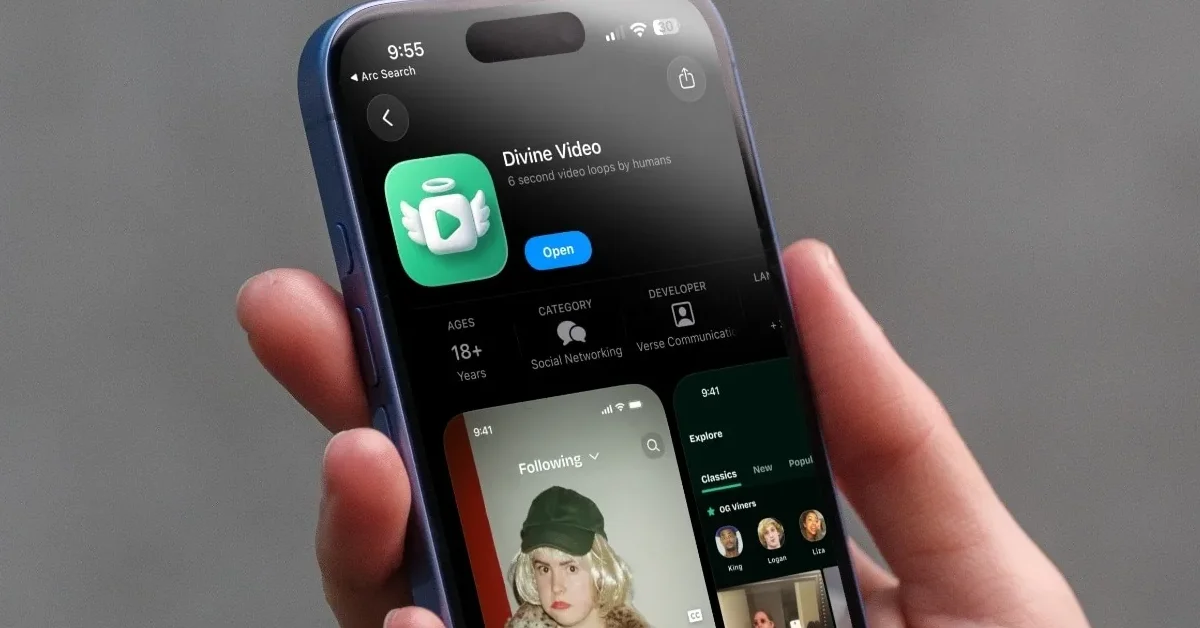
Invite codes stopped mattering in the third week of August 2026. Divine (also written diVine) had run as an invite-only beta since November 2025, then spent four months in the app stores with a code requirement still attached. Reports place the moment the gate came down between 19 and 20 August 2026, and the two-day gap has never been resolved. Either way, joining is no longer a favour somebody does for you. Joining is now a decision about where to spend production hours you could spend on a platform that already pays.
That decision deserves a plainer answer than the excitement around the app usually gives it. Divine is an independent application built by Evan Henshaw-Plath, who works under the name Rabble, through a public benefit corporation called Verse Communications. There is no ownership link to X, to Twitter or to the company that ran the original Vine. What the app does have is a hard six-second loop format, a restored archive of old clips, a rule that blocks anything you did not film inside the app, and a monetisation story that is exactly one feature old. Here is what that combination returns, and what it takes.
Is Divine Actually Vine or Something New?
The format is inherited and the archive is inherited. The company is not. Divine is a third-party project with no corporate connection to the original service, which means it carries none of the old advertising commitments and none of the old shareholder pressure. The archive of recovered clips passed two million videos by August 2026 and was still growing, rebuilt from backups that volunteers pulled before the original service went dark. Even the company's own documents disagreed on the size at earlier points in the year, so treat any single figure as a snapshot rather than a fixed number.
For a creator, the practical difference sits in what has not been decided yet. Rabble has framed the design goal as building something that cannot be enshittified later, borrowing Cory Doctorow's term for the way platforms treat users well, then squeeze them for business customers, then squeeze the business customers too. Whether that holds is untested. What is testable today is that the norms of the place are still soft, and soft norms are the thing early creators get to influence.
Open the Discovery feed and the mix tells you who is here. A clip filmed in 2014 sits directly above one recorded an hour ago. The audience is not purely nostalgic either; app store reviews include a young user who never used the original app and downloaded this one because they were tired of algorithmic slop. Two different reasons for being there, sharing one feed.
What Being Early on a Platform Historically Returns
The return on being early is not equity and it is not a payout. The return is a window where the supply of content is low enough that ordinary work gets seen. On a Discovery feed that shows all new videos rather than a filtered selection, a modest clip reaches people who would never have found it on a mature platform. That window closes as volume rises, and the invite gate coming down is precisely the event that starts closing it.
| What being early gives you | What it costs you |
|---|---|
| Low competition in Discovery and Trending feeds | Hours of filming for a small audience |
| Handle and name availability before the rush | No monetisation guarantee at any date |
| Influence over community norms and curation lists | Missing tools you already rely on elsewhere |
| Direct contact with a founder-scale team | Bugs and rough edges in the editor |
| First position if the platform does grow | Total loss of that time if it does not |
The cost column is not hypothetical. The complaint creators raise most often in store reviews is simply that there are not enough people yet, which is the network effect problem stated in the plainest possible terms. One reviewer wrote that the only thing missing is more people and more videos. A Turkish user noted that the Turkish audience is on the small side. Alongside that sit editor bugs, the absence of gallery upload, no music library and no live streaming.
History gives you the honest frame for the upside. The original service reached a company-stated peak of 200 million monthly viewers in 2015 and was shut down anyway, because its owner never built a revenue model around it and the service cost roughly ten million dollars a month to run. Its biggest creators had already left for YouTube and Instagram, feeling unsupported. What those creators kept was the audience relationship and the name recognition. What they lost was the platform. Assume the same split applies here.
What Six Seconds Forces You to Do Differently
Six seconds is a hard ceiling, not a suggested length, and the file loops automatically. You cannot save a weak idea with a slow build, and you cannot end on a fade, because the last frame runs straight into the first one. The strongest clips are written backwards from that seam, so the loop reads as deliberate rather than as a video that ran out.
| Constraint | What it forces |
|---|---|
| Six-second maximum | Cut setup entirely, open on the turn |
| Automatic loop | Design an ending that hands back to the start |
| In-app camera only | Plan the shot before you press record |
| Segmented, press-and-hold recording | Build in cuts live, in the order they will play |
| Recommended file size around 10 MB | Keep scenes simple, avoid busy backgrounds |
| Video file cannot be edited after posting | Reshoot rather than patch; only text fields stay editable |
The toolset is more capable than the length suggests. Segmented recording lets you hold to capture, release, reframe and capture again, so a three-cut gag is assembled during the shoot. There is stop motion animation, a green screen, clip speed control, voiceover recording and caption generation. An Inspired By feature lets you build on somebody else's clip or audio with the source credited, which is the closest thing here to a duet or stitch.
Think about how that changes a working session. A ten-minute idea that would become a forty-second TikTok with an edit pass and licensed audio becomes, here, a single planned setup you rehearse twice and shoot in one standing session. Faster in total, less forgiving in the moment. The self-deletion setting adds a small strategic option too, since a post can be set to remove itself after a day, a week, a year or ten years, which suits topical jokes that age badly.
Do You Still Need an Invite to Join Divine?
No. The code requirement was removed around 19 and 20 August 2026 and the app is open to anyone. Plenty of people are still hunting for invite codes because the older coverage has not caught up, so if you have been waiting for someone to pass you one, stop waiting. The invite gate is gone.
Worth knowing before you commit a production schedule: posting happens on mobile only. The web version lets you watch and browse, and nothing more. The App Store lists the app at 18 plus, while Teen and Family account types along with a Kids experience and a supervised mode for 13 to 15 year olds were announced in June 2026. First launch on mobile creates your account automatically, and there is also an email and password route if you prefer one.
The strategic read on the gate coming down is straightforward. During the invite period, scarcity did your marketing for you and the people inside were self-selected enthusiasts. Now anyone can arrive, which means the audience grows and the competition for the Discovery feed grows with it. If the argument for joining early was ever going to expire, it started expiring in August 2026. Being early is now measured in weeks, not in whether you know somebody.
How the AI Ban Changes What Gets Seen
The mechanism is simpler than most coverage makes it sound. You cannot upload from your gallery at all. Video comes from the in-app camera or it does not exist, and the company has said openly that this came from not finding a reliable, cost-effective way to screen uploads rather than from pure principle. Layers of detection sit behind that restriction, but the company states plainly that no detection system is perfect, so nobody should describe the platform as fully closed to synthetic media.
For your workflow, the consequences are concrete. No generated b-roll. No AI voice track. No desktop edit rendered elsewhere and dropped in. Archive clips carry a human-made label automatically because they predate generative video tools, and the verification badge appears only on archive content and on uploads verified through the app's provenance system, not on everything posted.
What that does to the feed is the interesting part for a creator. When nobody can out-render anybody, the things that separate clips are timing, physical performance, framing and the quality of the idea. A clean six-second gag filmed in a kitchen competes on level ground with anything else in Discovery. If your strength on other platforms was editing volume or generated assets, that advantage does not come with you. If your strength was being funny on camera in one take, the constraint works for you.
Can You Make Money on Divine Yet?
Barely, and you should plan on that basis. Creator tipping went live in August 2026 and is the only revenue feature currently running. Payments travel from viewer to creator directly at the protocol level with no platform cut in between, which is genuinely better economics per transaction than a fund that takes a share. Better economics on a small audience still produces a small number.
| Revenue path | Status as of August 2026 |
|---|---|
| Creator tipping | Live, no intermediary cut |
| Brand collaborations | First one announced 18 August 2026 |
| Advanced analytics | Planned, no date |
| Priority hosting | Planned, no date |
| Subscriber-only content | Planned, no date |
| Customisation tools | Planned, no date |
| Advertising revenue share | Not announced |
The brand side opened with a single collaboration announced on 18 August 2026, involving a large fast food chain. One deal is a signal, not a market. Everything else on the list sits behind an official line about planned future features and ongoing conversations with creator communities, and no timeline has been published for any of it. Ask for a date and there is not one.
The reason to take that seriously is the history. Dorsey, who funded the collective behind this project through a grant rather than owning any of it, has said it is no secret that they never found a business model for Vine. A platform with a devoted audience and no revenue model closed anyway. Divine's structure as a public benefit corporation changes the incentives somewhat, but it does not change the arithmetic. Treat any income from here as a bonus on top of work you were going to do, not as a line in your forecast.
What Divine Offers Creators That TikTok Does Not
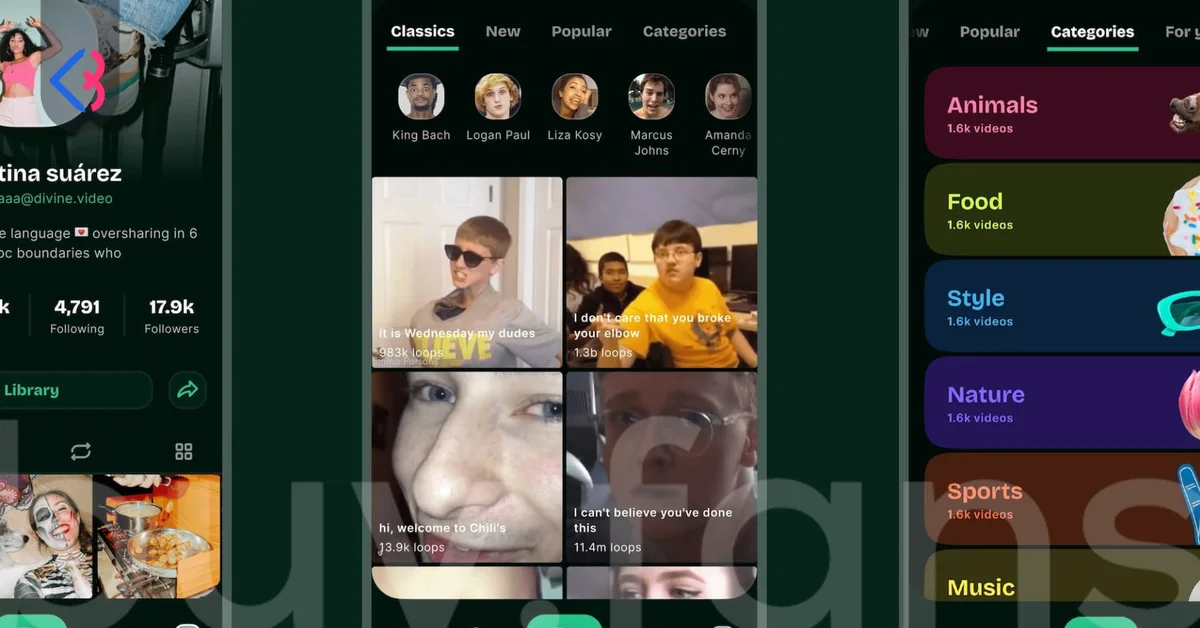
Three things stand out. Curation lists are open to everyone, where on the original service only staff could assemble a picks list, so building a well-followed list is a way to gain standing without posting a single clip. Compilation mode lets a viewer enter a tag and watch every matching video as one continuous run, which rewards creators who work a consistent theme instead of chasing unrelated trends. And you choose your feed rather than receiving one, switching between Home, Discovery, Trending and hashtag views, with community-built algorithms flagged as a future direction.
Smaller advantages stack on top. Posts can be set to delete themselves on a schedule. Clips cross-post to Bluesky. The Inspired By credit makes derivative work traceable back to its source, which matters if you are the person whose audio keeps getting borrowed. Your account also is not held by a single company in the way a conventional platform account is, so a suspension elsewhere does not follow you here.
Now the other column, stated without softening. TikTok has gallery upload, a licensed music library, live streaming, a mature advertising system, established creator payouts, and an audience that dwarfs anything a new app has. Its editor is more capable and its bugs are fewer. If your income depends on short video today, TikTok is your job and Divine is a side bet. The sensible allocation is a small, fixed number of hours a week here, taken from your experimental budget rather than your production schedule.


Can You Repurpose Your TikTok Content for Divine?
Not really, and this is the part creators underestimate. The camera-only rule blocks the obvious route of exporting a clip and uploading it. Filming your phone screen from a second screen is among the patterns the detection layer looks for, so that workaround is a poor bet as well. Even setting the rules aside, six seconds means most TikTok cuts need rebuilding rather than trimming, and licensed sounds do not travel with you because there is no music library here.
What does transfer is everything that was not the file. The idea, the timing, the character you play, the running gag your audience already recognises, the framing that works for your face. Take a forty-second cooking bit and the transferable part is the single moment where the pan catches fire, rebuilt as a loop that lands in six seconds and reads cleanly on the second pass. That is a genuine reshoot, roughly fifteen minutes of work per clip once you are used to the camera.
Plan the time honestly. A creator posting daily on TikTok who wants a real presence here is committing to a separate filming session, not a repost queue. Batch it. Pick a shooting day, run through six or eight ideas in one sitting using segmented recording, and post across the week. And be clear about what you are buying with those hours: an early position on a platform with an unproven business model, a small but genuine audience, one working payout feature, and a format that rewards the kind of performance you cannot fake in post.
This article was last updated on 23 October 2026 friday. Today, 28 visitors read this article.