
What a Reels First Instagram Would Change for Creators
A narrow test has some Instagram users opening the app on a vertical video feed instead of posts. Meta confirmed the test but published no announcement. The right question for creators is not what happened, but what would change if this layout became the default.
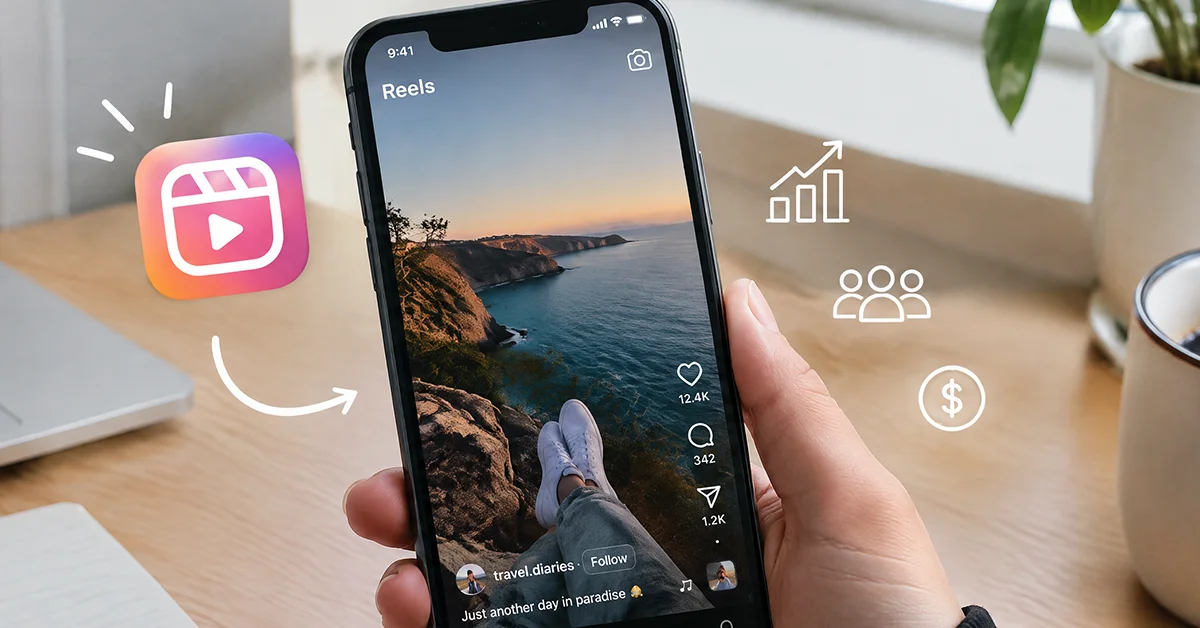
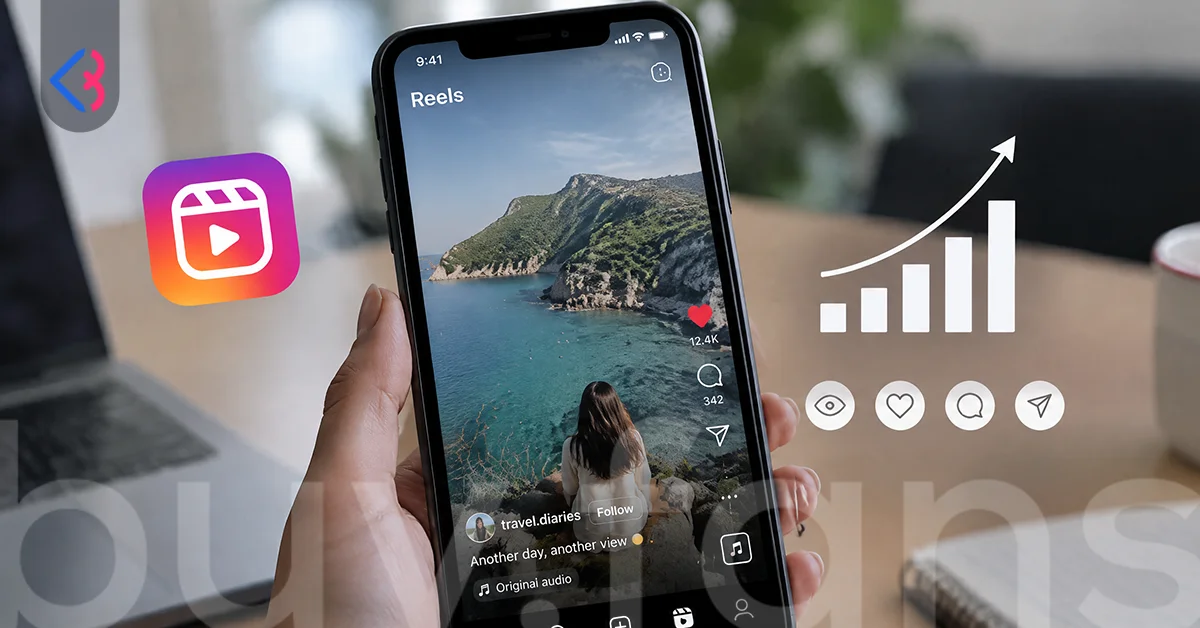
A small group of Instagram users now open the app and land on a vertical video feed rather than the familiar column of posts. The images came from an app researcher who shared them on Threads on 5 October 2026. There was no blog announcement from Instagram, yet a Meta spokesperson confirmed to the press that the test exists and described it as running in a small number of countries. The company gave no country list. Indonesia is the only market Meta has confirmed, and the United States is not part of the test.
That gap between a confirmed test and an absent announcement is where most creator advice goes wrong. As of 10 October 2026, nobody outside Meta knows how wide the test goes, how long it lasts, or whether it survives at all. What can be examined is the decision the layout would force. If the opening screen becomes a Reels feed, your format mix, your reach expectations and your posting cadence all sit on different ground. That scenario is worth planning for without pretending it has arrived.
Why Does the Opening Surface Matter More Than Feed Ranking?
Ranking decides the order of what you see. The opening surface decides what you see first, before any scroll, any tap, any choice. A creator can adapt to ranking changes with better hooks and better timing. A change in the launch tab is different in kind, because it changes which format gets the viewer's first three seconds every single session.
A viewer who opens on the home feed meets a static post, a carousel and a Stories row, and video is one option among several. A viewer who opens on Reels is already inside a vertical player, and everything else needs a deliberate detour. In the test layout the Stories tray stays above the video and the traditional feed sits one swipe across, so posts are reachable but no longer first. Reachable and first are not the same thing for distribution, and that distinction is the whole story for anyone planning a month of content.
The first surface also sets the viewer's mood for the session, an effect that gets less attention than ranking does. Someone who arrives in a video player is in a watching posture, scrolling for the next hook. Someone who arrives in a post feed is in a reading posture, more willing to stop on a caption or open a carousel. A reels first Instagram for creators would not simply reshuffle formats. It would meet the audience in a different frame of mind, and captions written for readers underperform with watchers.
What Has Meta Actually Confirmed About This Test?
Confirmation here is narrow, and the limits of it need stating precisely. A Meta spokesperson told reporters the test is real and limited to a small number of countries. There is no official blog post, no help centre entry, and no published rollout schedule. Instagram has not said the layout will spread, and has not said it will not.
Two details that circulate widely do not survive checking. The setting's name and its menu path were not found in any primary source, so any article giving you a path to tap is guessing. The in-app explanation text has only ever been paraphrased, never quoted directly. One behavioural detail beats all of that invented precision. In the test layout, Reels play muted until the viewer swipes to the video or taps it. Silent first frames change what a strong opening looks like, and that is a concrete production note rather than a rumour.
What the Data Actually Says About Reels Time Spent
Figures travel faster than their context, and the Reels numbers have travelled badly. Below is every figure worth citing, with its owner, its date and its scope. Read the fourth column before reusing any row, because several of these describe different things that get blended into one sentence elsewhere.
| Figure | Who said it | When | What it actually covers
|
|---|---|---|---|
| 50% of time spent in the app | Zuckerberg | 24 April 2024 | Reels share of time on Instagram, a company statement |
| Over half of content shown | Zuckerberg | 24 April 2024 | AI recommended content, measured in content, not in time |
| More than 60% of time spent | Zuckerberg | 24 April 2024 | Video across Facebook and Instagram together, two apps |
| 20% of time spent | Meta | April 2022 | Reels share two years earlier, useful for direction |
| 10% rise in Reels time | Meta | 29 April 2026 | Effect of ranking changes, the most recent official Reels figure |
| More than 30% of recommended Reels | Meta | 29 April 2026 | Share posted the same day |
| 46% of time in one market, up from 37% in 2024 | An independent measurement firm | January 2026 | A single national market, third party, not a Meta figure |
| 3 billion monthly active users | Meta | 24 to 25 September 2025 | Whole platform, not Reels |
The honest reading of this table is that the headline share is exactly 50%, not a majority of app time, and that the figure is already two and a half years old. No 2026 figure for the Reels share of time has been published. Mosseri's own framing in late September 2025 was that almost all of Instagram's growth has been driven by DMs, Reels, and recommendations. Three drivers, and growth rather than engagement gains. Any plan built on Reels being the single cause of everything is built on a sentence nobody said.
Did Instagram Try a Full Screen Feed Before?
History here is unusually clear, and it cuts against the assumption that this layout is inevitable. Instagram announced a full screen feed on 16 June 2022. By 26 July the head of Instagram was on video saying the design was not good yet. On 28 July 2022 the company pulled it.
Mosseri's words at the time were blunt about why: "For the new feed designs, people are frustrated and the usage data isn't great." That episode lasted six weeks from announcement to reversal. The 2026 version, by contrast, appears as something a user can turn on and turn off rather than something applied to everyone overnight. A test that can be exited can also be abandoned quietly. Creators who rebuilt their whole output around that announcement spent the rest of the summer rebuilding it back.
Why Would a Persistent Opening Preference Be a First?
Instagram already offers more than one feed. Following shows posts from accounts you follow in chronological order, and Favorites shows recent posts from up to 50 chosen accounts. Both opened to everyone on 23 March 2022. Neither can be set as the default. The app returns to the algorithmic feed every time it launches, which is why most people who tried those tabs stopped using them.
That limitation is what makes the current test interesting beyond the novelty of video. A setting that keeps the app opening on Reels across sessions would be the first persistent opening screen preference Instagram has shipped. Separately, a feature called Your Algorithm lets viewers steer their own recommendations by topic, and it is offered officially in English only. Steering recommendations is a different thing from choosing a launch surface. The table below separates what persists from what resets.
| Feed option | What it shows | Can it be set as the opening default?
|
|---|---|---|
| Home | Algorithmic mix of posts and recommendations | It is the default, by design |
| Following | Posts from followed accounts, chronological | Not possible since 23 March 2022, resets on launch |
| Favorites | Recent posts from up to 50 chosen accounts | Not possible, resets on launch |
| Reels tab | Vertical video, reached from the bottom navigation | Reachable, but not an opening surface today |
| Reels opening option, in test | App launches on the Reels feed | Unconfirmed, and would be the first persistent opening preference |
How Would a Reels First Layout Change Your Format Mix?
Scenario planning beats prediction when the underlying event is unconfirmed. Three outcomes are plausible from where things stand on 10 October 2026, and each one implies a different output split. Treat the percentages as planning anchors rather than targets handed down by Instagram.
| Scenario | Reels share of output | Role of static posts and carousels | What to watch
|
|---|---|---|---|
| Test stays narrow and quietly ends | 30 to 40%, unchanged from now | Carries saves, information and product detail | Whether official country confirmation ever widens |
| Option spreads but stays opt in | 45 to 55% | Depth and conversion, reached by viewers who already follow you | Share of your reach coming from non followers |
| Reels becomes the opening default | 60 to 70%, with vertical first production | Repackaged from video, or kept for profile depth | Completion rate and first three second retention |
Two practical notes cut across all three rows. Vertical production in 9:16 can be planned so that a carousel and a Reel come out of one shoot, which protects you in every scenario rather than betting on one. Because the test plays video muted until the viewer acts, an opening frame that works without sound beats a clever audio hook. Caption the first line on screen, and treat sound as reinforcement rather than the mechanism.
Should Creators Change Posting Cadence Before Anything Is Confirmed?
Cadence is the most expensive thing to change and the easiest thing to change for the wrong reason. Doubling Reels output on the strength of a test running in an unnamed handful of countries usually produces thinner work, not more reach. The cheaper move is to change how you produce, not how much, so that a shift in the launch tab costs you a week instead of a quarter.
The table below splits what is worth doing now from what should wait for confirmation. The test of a good row here is whether the action still pays off if the layout disappears next month.
| Decision | Do it now | Wait for confirmation | Reason
|
|---|---|---|---|
| Shoot vertical by default | Yes | Useful in every scenario, no downside if nothing changes | |
| Design soundless opening frames | Yes | The test plays video muted until the viewer taps or swipes | |
| Raise Reels count per week | Yes | Output volume is the costliest reversal if the test ends | |
| Drop carousels and static posts | Yes | Saves and profile depth still come from these formats | |
| Track completion rate as a primary number | Yes | Already how Reels feed distribution behaves today | |
| Rebuild your content calendar around video | Yes | The 2022 reversal shows announced designs can be pulled |
What Would Reach Expectations Look Like Under a Video First Launch?
Expectation setting matters more than tactics here, because the same follower count behaves differently on different surfaces. A feed built around followed accounts rewards consistency with an existing audience. A recommendation driven video surface rewards retention with strangers, which means variance goes up. Good months get better and quiet months get quieter, and the account average tells you less than it used to.
For a creator who already earns watch time, a video first launch would be an advantage rather than a threat. If that shift ever lands, the first thing worth protecting is early retention on your strongest videos. The same logic is why some creators choose to buy Instagram Reels views on pieces they intend to promote anyway, rather than spreading effort evenly across everything they post. The conditional matters in both sentences. Nothing about this test is settled, and no unconfirmed layout change creates an obligation to spend. What the test does create is a reason to know which of your videos holds attention past three seconds. That number would carry more weight on a surface people land on rather than scroll to.
How Far Does Meta's Video Push Reach Beyond Instagram?
The Instagram test does not stand alone. A parallel Facebook test drops users straight into a full screen video feed. Two tests running at once suggest a company level preference for video rather than one product team's experiment.
Even so, company preference is not the same as a shipped default. The April 2026 disclosure that ranking changes lifted Reels time by 10% shows Meta tuning distribution inside the current layout, not replacing it. Over 30% of recommended Reels were posted the same day, which rewards freshness more than format loyalty. A creator can act on freshness today with no guesswork, while the opening surface question stays open.
The test also arrives as a toggle rather than a switch thrown for everyone. Instagram has three billion monthly active users to protect, and a layout people dislike costs more than a layout they ignore. Offering the video surface as a choice lets the company collect usage data without risking the whole app, which is precisely the lesson of the 2022 reversal. For a creator, the useful inference is about direction rather than certainty. The direction of travel favours video, and the pace of travel remains Meta's to decide.





Where Should a Creator Place Their Bets Right Now?
Placing bets under uncertainty means choosing actions that survive more than one outcome. Vertical capture, soundless openings, retention tracking and a repeatable production loop all pay off whether the app opens on posts or on video. They cost nothing if the test ends, and they put you ahead if it does not.
The things to hold back are the irreversible ones. Do not retire formats that still earn saves and profile visits. Do not promise an audience a cadence you cannot hold for six months. A spokesperson's confirmation of a test is also not an announcement of a default. Instagram already demonstrated, in six weeks during the summer of 2022, how fast a feed design can be withdrawn. Build for the layout you have, in a way that transfers to the layout you might get.
This article was last updated on 12 October 2026 monday. Today, 37 visitors read this article.