

What VALORANT Patch 13.01 Changes for Outlaw and Iso
Outlaw finally gets recoil and spread after its first shot, Iso's Double Tap now swaps weapons instantly, Yoru's Gatecrash marker lasts five seconds longer and Fakeout clones stopped giving away the bluff, rank manipulation now carries real penalties, and Discord integration rolls out worldwide on July 21.
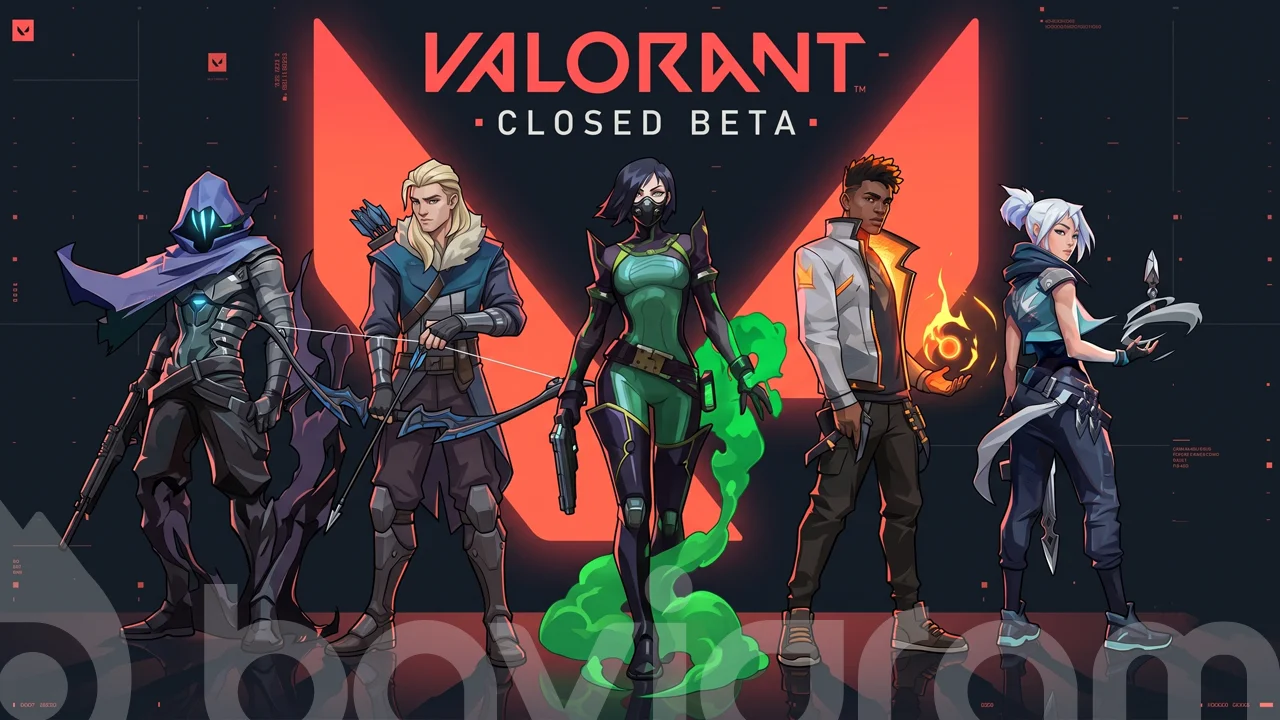
VALORANT's Patch 13.01, released on July 14, pairs a weapon nerf with a policy shift that matters more than any single number change. Outlaw picked up its first real drawback since launch, Iso and Yoru both got measurable buffs, and Riot started actually penalizing confirmed rank manipulation instead of just tracking it. What follows breaks down the Outlaw adjustment first, then the agent changes, the enforcement policy, the full bug fix list, and the new Discord integration.
What Does Outlaw's New Recovery and Recoil Actually Change?
Outlaw had been performing strongly with almost no downside on its back-to-back shots, and Riot wanted to keep that power while adding room for skill expression. Patch 13.01 adjusts three separate values to get there.
| Value | Before | After |
|---|---|---|
| Recovery after first shot | 0.1 | 0.15 |
| Spread after first shot | 0 | 2.25 |
| Recoil after first shot | 0 | 4.0 |
Picture a player firing two quick shots in a row with Outlaw. In the previous version, that second shot landed with almost the same precision as the first; now that recoil has been added, keeping that second shot on target takes an actual recovery of aim rather than just holding the crosshair steady. The weapon still one-shots at the same power level, it just no longer rewards spraying two shots without adjusting for it.
The change widens the gap between a player who can control recoil and one who cannot, rather than gutting the weapon outright. A player with solid aim discipline still gets full value out of Outlaw; a player who cannot compensate for the new recoil loses some of that back-to-back reliability. The next section moves from weapon tuning to the far bigger policy shift buried in this same patch.
Why Is Riot Cracking Down on Rank Manipulation Now?
Riot built new detection tools for rank manipulation in VALORANT, based directly on systems that worked well in League of Legends the year before. Combined with data collected since the Rank Manipulation reporting category was added late last year, that data now clears the bar needed to start issuing real penalties for confirmed cases.
The timing is not random. Riot spent months gathering data after adding the reporting category, trained its detection against that data, and only started punishing accounts once detection accuracy hit a reliable threshold. Picture an account climbing several ranks in a suspiciously short stretch of ranked play; that pattern alone used to just look odd, but it can now be cross-checked against behavioral data collected over the past several months.
The logic behind waiting matters here. Riot chose to build confidence in the system before enforcing penalties rather than rushing punishment out the door, which lowers the odds of a legitimate player getting caught up in a false positive. The next section covers exactly what happens once a case gets confirmed.
What Happens When VALORANT Confirms Rank Manipulation?
Three types of penalties apply once a case is confirmed: account suspension, rank reversion, and the reversal of ranked rewards. All three can stack depending on how serious the case is; Riot decides which penalties apply based on the severity of the confirmed violation.
The most notable part of the rollout is its transparency. When a player in a match receives a rank manipulation penalty, everyone else in that same match gets reporter and bystander feedback about it. Picture a player who reports a suspicious teammate mid-match; that report is not disappearing into a void anymore, since confirmed cases now generate visible feedback for the person who filed it.
Riot's stated goal is protecting ranked integrity and making sure competitive progress reflects actual skill. For a player climbing honestly, this is a direct win; accounts that manipulated their way up now lose the advantage of facing opponents below their real skill level. Full detail on what counts as rank manipulation and how enforcement works sits in a separate Play Fair article Riot published alongside the patch.
Why Is Double Tap Now an Instant Weapon Swap for Iso?
Iso's Double Tap ability creates a shield that protects him from damage for a few seconds. When that shield expired or got dropped early, the previous version left a brief delay before the weapon could be re-equipped. Patch 13.01 removes that delay entirely; re-equipping is now instant.
Picture an Iso player dropping the shield early to punish an opponent up close. Under the old system, that player was briefly weaponless the instant the shield ended, and that tiny gap created a real opening in close-range duels. With the delay gone, Iso can fire back at full strength the moment the shield drops, making the ability noticeably more reliable for aggressive play.
The change is small on paper but meaningful in the meta. Removing even a fraction-of-a-second delay makes Iso considerably more appealing to duelist mains who were previously hesitant to commit to close-range fights right after dropping the shield.
How Do Gatecrash and Fakeout Work Differently for Yoru Now?
Yoru's Gatecrash creates a rift marker that lets him teleport back to that spot later. The marker's active duration went from 15 seconds to 20 seconds, and that five-second gap gives players who like to wait for a better moment before teleporting noticeably more flexibility.
His second changed ability, Fakeout, creates a decoy meant to mislead enemies. In the previous version, that decoy always held Yoru's strongest weapon, which gave sharp opponents an easy way to tell the decoy apart from the real Yoru. Now the clone holds whatever weapon Yoru last equipped, making the deception far more consistent.
Picture a Yoru player dropping a decoy during a pistol round. Previously, the clone would show up carrying a rifle even though the real Yoru only had a pistol in hand, and that mismatch was a dead giveaway for an attentive opponent. With the clone now mirroring the last equipped weapon, that logical inconsistency disappears, and Fakeout actually earns its name.
Which Agents Got Bug Fixes in Patch 13.01?
Patch 13.01 ships a long list of bug fixes spanning dozens of agents and two maps. Most are visual or interaction inconsistencies, but a handful removed small gameplay advantages players had been quietly exploiting.
| Agent | Fixed Issue |
|---|---|
| Astra | Ability cooldown timer could remain visible after the ability was already used |
| Clove | Could gain an extra charge of Ruse during the Buy Phase by purchasing and reselling ability charges |
| Cypher | Cyber Cage could block line-of-sight incorrectly, its trajectory indicator would not show outside line of sight, it sometimes failed to play an audio cue; some Spycam voice lines would not play correctly |
| Deadlock | GravNet's third-person visual effects could disappear after a disconnect and reconnect |
| Gekko | Nearsight visual effects on controllable creatures could persist after the creature was destroyed |
| Iso | Double Tap could incorrectly prevent the first instance of fall damage |
| Jett | Cloudburst could activate during Updraft or Tailwind animations when multiple abilities shared a keybind; could not pick up the Spike or weapons during Tailwind |
| KAY/O | FLASH/drive was missing part of its visual effects; equipping it could skip an animation |
| Killjoy | Alarmbot could interact with players through certain wooden covers on Split |
| Miks | Could gain an extra charge of Waveform during the Buy Phase by purchasing and reselling ability charges |
| Neon | Could be unable to pick up the Spike while sliding over it |
| Reyna | Dismiss could occasionally leave her unable to equip a weapon; Leer could blind players in unintended spots near A Main on Abyss |
| Sage | Players revived inside Viper's Pit or Poison Cloud did not correctly receive the Nearsighted debuff |
| Skye | Could gain an extra charge of Guiding Light during the Buy Phase by purchasing and reselling ability charges |
| Viper | Players using controllable abilities could briefly see through Viper's Pit |
| Veto | The Evolution voice filter could persist on certain voice lines for the rest of the match after the Ultimate |
| Yoru | Could gain unintended movement speed in Dimensional Drift when interacting with Flex or Totems |
| Split (map) | Certain wall-based abilities could be cut off when used in the middle of B Garage |
| Summit (map) | Iso could survive the falling door crush; Waylay could reach unintended locations using Refract and Lightspeed |
The Clove, Miks, and Skye entries stand out for a reason beyond the individual fix. All three describe the exact same exploit: gaining an extra ability charge by purchasing and reselling charges during the Buy Phase. Seeing the identical bug fixed across three unrelated agents suggests Riot is chasing a shared underlying mechanic, not just patching isolated cases one at a time.
What Is the One Known Issue Still Open?
Only one known issue made it into this patch's notes: Omen's Shrouded Step ability is missing its obstructed placement indicator. The ability itself still works; the visual cue that normally shows which teleport spots are invalid has temporarily disappeared.
For an Omen player, the practical effect is straightforward. Choosing a teleport destination now takes map knowledge instead of relying on the indicator, at least until a future patch restores it. Listing this as a known issue rather than staying silent about it signals that Riot is aware of the gap and treating it as something to fix later, not something players need to work around on their own.
How Does the New Discord Integration Change Squading Up?
VALORANT is partnering with Discord on a new social feature exclusive to PC. Linking accounts makes it possible to invite Discord friends straight into a VALORANT party, share a lobby link directly in a server, and see which Discord friends are currently playing VALORANT.
The feature launched as a beta in Brazil first and expands globally on July 21, everywhere Discord is available. Picture a group of friends who talk constantly on Discord but keep switching between apps just to get a party started in VALORANT. Once the integration goes live for their region, that same group can build a full party without ever leaving Discord.
Paired with the rank manipulation crackdown in the same patch, the Discord rollout points to a dual focus: making it easier to play with friends while also tightening what counts as fair competitive progress. Neither change touches core gameplay balance directly, but together they shape how the next several weeks of ranked play are going to feel.
This article was last updated on 24 October 2026 saturday. Today, 28 visitors read this article.