
What TikTok Peer To Peer Payments Would Change
A payment feature TikTok never announced still says something useful about where creator income is heading.
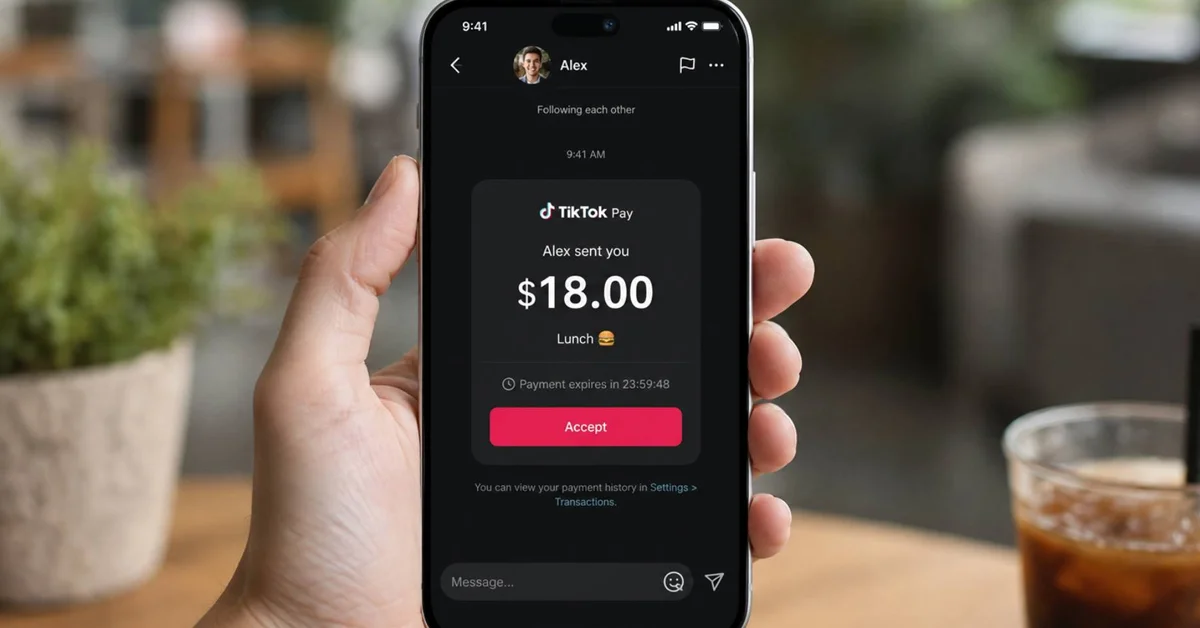
On 18 August 2026, an international financial news agency reported finding references to a person to person money transfer feature in the code of the current version of TikTok's US iPhone app. That is the whole confirmed story. There was no product page, no screenshot, and no launch window. TikTok's spokesperson said the feature is not in testing in any market, and the agency itself wrote that there is no guarantee the company will ever release it.
Plenty of coverage skipped past that. Headlines described a test, a rollout, or a Venmo competitor arriving in your inbox. TikTok said none of it. What follows treats the code references as what they are, an early signal with no timeline. Most of the article deals instead with the question that affects your income now, which is how creator money reaches you and what a direct transfer rail would change.
What the TikTok Payment Code Actually Showed
The reported findings are thin, and the thinness is the point. The only code string that made it into press coverage was "tap to accept", which points to a recipient who confirms an incoming transfer rather than one who receives it silently. Alongside that, the reporting described a transfer that expires if the recipient does not act before a deadline, status updates delivered to the sender through push notification or the inbox, and the ability to attach a message or note to a payment. No other strings, no screenshots, no interface copy.
Put that together and you get a rough shape rather than a product. A sender picks an amount, writes a note, sends it inside a conversation, and waits for acceptance. If the feature ever shipped, coverage expects the existing TikTok Pay tool to handle the transactions, though that is an expectation rather than a settled architecture decision. TikTok Pay currently operates in Vietnam, Malaysia and Thailand, and only for TikTok Shop purchases, funded by a stored balance or a linked bank card. As of 22 August 2026 there has been no further development, no test, and no official statement beyond the denial.
How Does Creator Money Reach You on TikTok Today?
Right now, none of your TikTok income arrives directly from a viewer. Every channel routes through the platform first, and each one has its own qualification rules, its own accounting, and its own delay before the money lands in your bank account. A viewer who wants to hand you five dollars during a live stream cannot do that. They buy coins, spend them on a gift, and a reduced amount eventually surfaces on your side as a withdrawable balance.
Consider a mid-sized creator running two live streams a week alongside regular uploads. Their income might come from live gifting, from the Creator Rewards Program if they qualify, from TikTok Shop affiliate commission, and from brand deals negotiated off-platform. Only the last of those involves money moving directly between two parties. Everything else is platform-mediated, which means the platform sets the rate, the threshold and the timing.
Income channel | How the money reaches you | Who sets the terms |
| Live gifting | Viewer buys coins, sends a gift, gift converts to diamonds, diamonds convert to a withdrawable balance | TikTok, with no published conversion rate |
| Creator Rewards Program | Platform payment based on qualified views, subject to eligibility review | TikTok |
| TikTok Shop affiliate | Commission on tracked sales, paid through the seller and platform system | TikTok and the seller |
| Brand partnership | Direct invoice or agency payment, outside the app entirely | You and the brand |
| Direct fan transfer | Does not exist. Code references only, no confirmed product | Unknown |
 Why Do Live Gifts Lose Value Before They Reach You?
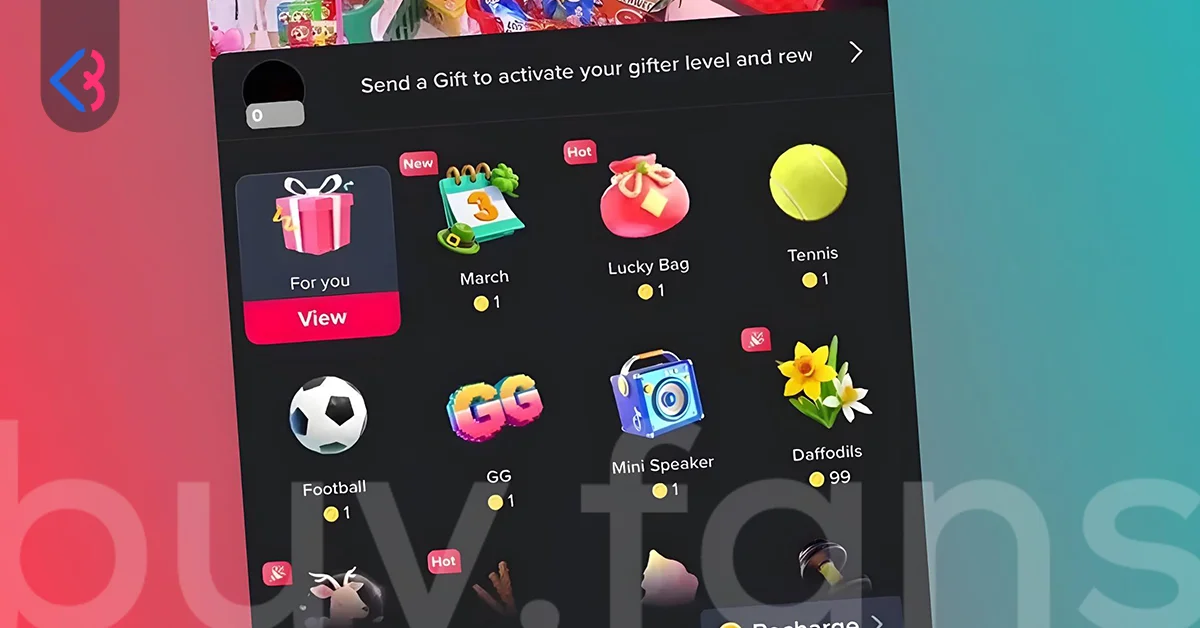
The gifting system is a closed loop with a conversion step at every junction. A viewer buys coins with real money, spends those coins on a gift during a live stream, and the gift appears on your side as diamonds. Diamonds then convert into a balance, and the balance is what you withdraw. Every conversion takes a cut, and TikTok does not publish an official rate for any of them.
Third-party sources report a platform share of roughly half the original purchase, and a diamond value of around half a cent, but both figures come from outside TikTok and both can change. There is a second leak most creators never see, on the buyer's side. TikTok itself notes that buying coins through the website costs less than buying them inside the app, because in-app purchases carry an app store commission. Reported estimates put the gap at roughly a quarter. A viewer who pays the full app store price spends more for the same gift you receive.
That gap explains a lot. Gifting income feels smaller than the enthusiasm in your chat suggests, because a viewer who felt generous may have moved only a fraction of that money onto your side. A direct transfer would collapse those steps into one, though nothing confirmed says TikTok intends that.
What Is the Difference Between the Creator Fund and Creator Rewards?
Here is a correction worth more than any speculation about unreleased features. The Creator Fund closed, and the Creator Rewards Program replaced it. The two are different programmes with different economics. Guides across the web still publish old Creator Fund per-view figures under the new programme's name, which means creators plan around numbers that describe a fund that no longer exists.
No per-view figure appears in this article for either programme, because there is no verified one to publish. Reports do cover the entry conditions, and one of them is missing from nearly every guide. Reported requirements include at least 10,000 followers, at least 100,000 qualified views in the previous 30 days, being 18 or older, and posting original video longer than 60 seconds. Treat all four as reported rather than official, and note that available sources do not confirm country by country eligibility.
The 60-second rule reshapes strategy in a way follower counts do not. A creator who hits every follower and view threshold while posting 25-second clips may never qualify.
Point of confusion | What is actually reported |
| "The Creator Fund pays X per view" | The Creator Fund closed and was replaced |
| Old fund rates quoted as Creator Rewards rates | Two separate programmes with different economics |
| A single reliable per-view rate exists | No verified figure available for either programme |
| Follower count is the main gate | Qualified views in a 30-day window also apply |
| Any video length qualifies | Reported rules require original video over 60 seconds |
| Everyone in every country can join | Country eligibility could not be verified |
How Would a Direct Transfer Change Tipping?
Gifting and tipping are not the same behaviour, even though creators use the words interchangeably. A gift is a performance. It happens live, in front of an audience, with an animation on screen and a name called out. Part of what the sender buys is visibility inside the room. Tipping is quieter, closer to slipping someone money after a good set, and TikTok currently has no format for it.
A direct transfer inside a conversation would create one. Say a viewer watches a 12-minute video where you explain how you fixed a specific problem, and it saves them an afternoon. They cannot express that with a live gift, because your stream ended two days ago. They could send a small transfer with a note attached, which is exactly the behaviour the reported code shape suggests. The economics differ too, since a transfer would presumably move a stated amount rather than passing through two conversion steps.
There is a cultural cost on the other side. Gifts are public and they feed each other, since one viewer's gift prompts the next. Private transfers generate no social proof at all. A creator whose live income depends on visible momentum could find that a quieter channel produces fewer, larger payments from a smaller group.
What Does a Direct Payment Rail Mean for the Fan Relationship?
Money that travels through a platform carries the platform's framing. TikTok scores, ranks and displays a gift, and leaderboards partly mediate your relationship with the sender. Direct payment removes that framing and replaces it with something closer to patronage, where a specific person decides your work is worth a specific amount and tells you so in a note. That changes who your most valuable audience members are.
It also changes what audience size means. A creator with a large follower count and shallow engagement may collect fewer direct transfers than someone with a fraction of the audience and a strong personal relationship with it. Growth services affect one side of that equation only, so be precise about which. If you choose to buy TikTok followers to raise the number on your profile, understand that the number is all it changes. It does not create qualified views, and it does not make you eligible for TikTok's monetisation programmes, since eligibility there rests on qualified views and TikTok's own review. Follower services have no bearing on gift income either, or on any hypothetical payment feature.
The practical takeaway runs the other way. If direct payments ever exist, the creators who benefit most will be the ones whose audiences already reply, already return, and already feel spoken to.
Have Social Platforms Tried This Before?
Repeatedly, with mixed outcomes. The record matters for creators because it tells you how much weight to put on an unconfirmed feature. Snapcash is the clearest cautionary example, launched in 2014 and shut down on 30 August 2018. It failed for three reasons worth remembering. The service drifted from splitting bills between friends toward paying adult content creators, mature alternatives already existed so legitimate use stayed low, and privacy and security concerns eroded user trust.
Not every attempt collapsed. WeChat Pay's 2014 red envelope campaign more than doubled its market share, and the founder of a rival company described it as an ambush on his own business. LINE Pay started in Japan the same year, with instant transfer inside the chat interface as its core appeal.
Platform | Status | Detail |
| X Money | Active, limited | Launched in the US in late July 2026 for Premium and Premium+ subscribers only, by invitation |
| Snapcash | Closed | Opened in 2014, shut down on 30 August 2018 |
| Messenger P2P | Partly closed | Ended in the UK and France on 15 June 2019, continues in the US |
| Meta Pay | Active | Facebook Pay became Meta Pay on 28 September 2022 |
| WhatsApp Pay | Limited | User to user transfer in India and Brazil only, business payments in Singapore |
| WeChat Pay | Mature | The 2014 red envelope campaign more than doubled its market share |
| LINE Pay | Mature | Started in Japan in 2014, built around transfers inside chat |
TikTok's own financial steps sit in this context. On 31 March 2026 the company filed two licence applications with Brazil's central bank, one as an electronic money issuer and one as a direct credit company, with no reported outcome.
 Why Can a Peer To Peer Payment Not Be Reversed?
Here is the mechanic every creator and every fan should understand before any such feature exists. Once a peer to peer transfer completes, it is essentially final. If the sender approved the payment themselves, even after a fraudster tricked them into it, banks treat the transaction as authorized and are not legally obliged to refund it. The dispute process that protects card payments does not apply, because no card network sits in the middle.
Fraud of this type has its own category name, authorized push payment fraud, and the defining feature is that the victim consents. Nobody steals the credentials. The fraudster persuades the victim to press send. That is precisely why this channel beats cards for them.
The scale, in US data only, is substantial. Reported peer to peer scam losses in the United States reached 8.3 billion dollars in 2024, with projections of 14.9 billion by 2028. One service reported more than 41,000 cases and 171 million dollars in losses during the first half of 2024, and complaints across three major US banks alleged more than 870 million dollars in cumulative losses over seven years. Available sources carry no equivalent figures for other countries.
How Do You Spot a Fake Send Money Scam?
You do not need the feature to exist for the scam to work. Fraudsters already run gift and coin giveaway schemes on TikTok, and each one rests on the same promise, that if you send them a gift they will send back ten times the value. A payment feature in the news gives that pitch a fresh disguise. Fake "early access to TikTok send money" messages are exactly the kind of hook that spreads while a rumour is live.
Watch for the pattern rather than the wording. Someone contacts you first, mentions a feature or a prize, creates a deadline, and asks you to move money or credentials before you can check anything. Related patterns on the platform include fake campaign messages saying you have won a gift, investment scams pushing you toward fake trading sites, and phishing where someone offers to "set up your settings" and collects your login.
A short defensive routine covers most of it. Set your account to private if your format allows, restrict who can message you, decline live invitations from people you do not know, ignore any message that asks you to send money first, and turn on two-step verification. If something crosses your inbox, report it in the app through your profile menu under the fraud or fake activity option.
What Should Creators Do While the Feature Is Unconfirmed?
Build nothing on a feature that may never exist. Prepare the parts of your business that pay off either way, and stay accurate when your audience asks about the news. Being the creator who explains that TikTok denied testing beats being first with a wrong headline.
Four moves make sense now, independent of what happens next.
- Audit which of your income channels are platform-mediated and which are direct, then work on increasing the direct share through brand relationships and off-platform offers.
- Check your video lengths against the reported 60-second Creator Rewards condition, and treat the whole reported requirement set as unconfirmed until you see it in TikTok's own documentation.
- Stop quoting per-view earnings figures to yourself or your audience, since the widely circulated numbers describe a fund that has closed.
- Tell your community, before any payment feature exists, that you will never message them first asking for money, and that any account doing so is not you.
One more piece of housekeeping belongs here. Creator income is taxable in most countries, and if a direct transfer rail ever arrives, the accounting treatment of a fan payment may differ from that of a platform payout. Speak to a qualified accountant in your own country rather than to a comment section.
This article was last updated on 23 October 2026 friday. Today, 4 visitors read this article.